


How to Track Flight prices: An Actionable Guide to Scoring the Best Deal
- Shontika Wandick
- Oct 9, 2025
- 9 min read
Stop manually refreshing airline websites. The most effective way how to track flight prices is to use automated tools that do the work for you. Setting up targeted price alerts is the single best strategy for catching price drops before they disappear.
Your Modern Playbook for Finding Cheap Flights
Scoring a great flight deal is a strategic game against airline pricing algorithms. These complex systems adjust fares constantly, which is why refreshing your browser is no longer an effective tactic. You need a modern playbook.
The core of this strategy is setting up targeted alerts that monitor fares 24/7. You define your destination and travel dates, and the tools notify you the moment a price drops. This direct approach is a game-changer.
Step 1: Define Your Trip. Know your destination, preferred travel dates, and your flexibility (e.g., can you fly mid-week?).
Step 2: Choose Your Tools. Select 2-3 reliable price tracking platforms like Google Flights or Hopper.
Step 3: Set Specific Alerts. Create alerts for your exact dates and a separate, more flexible alert (e.g., "a one-week trip in May") to catch wider deals.
Step 4: Act When Notified. When a price drops into your target range, be ready to book.
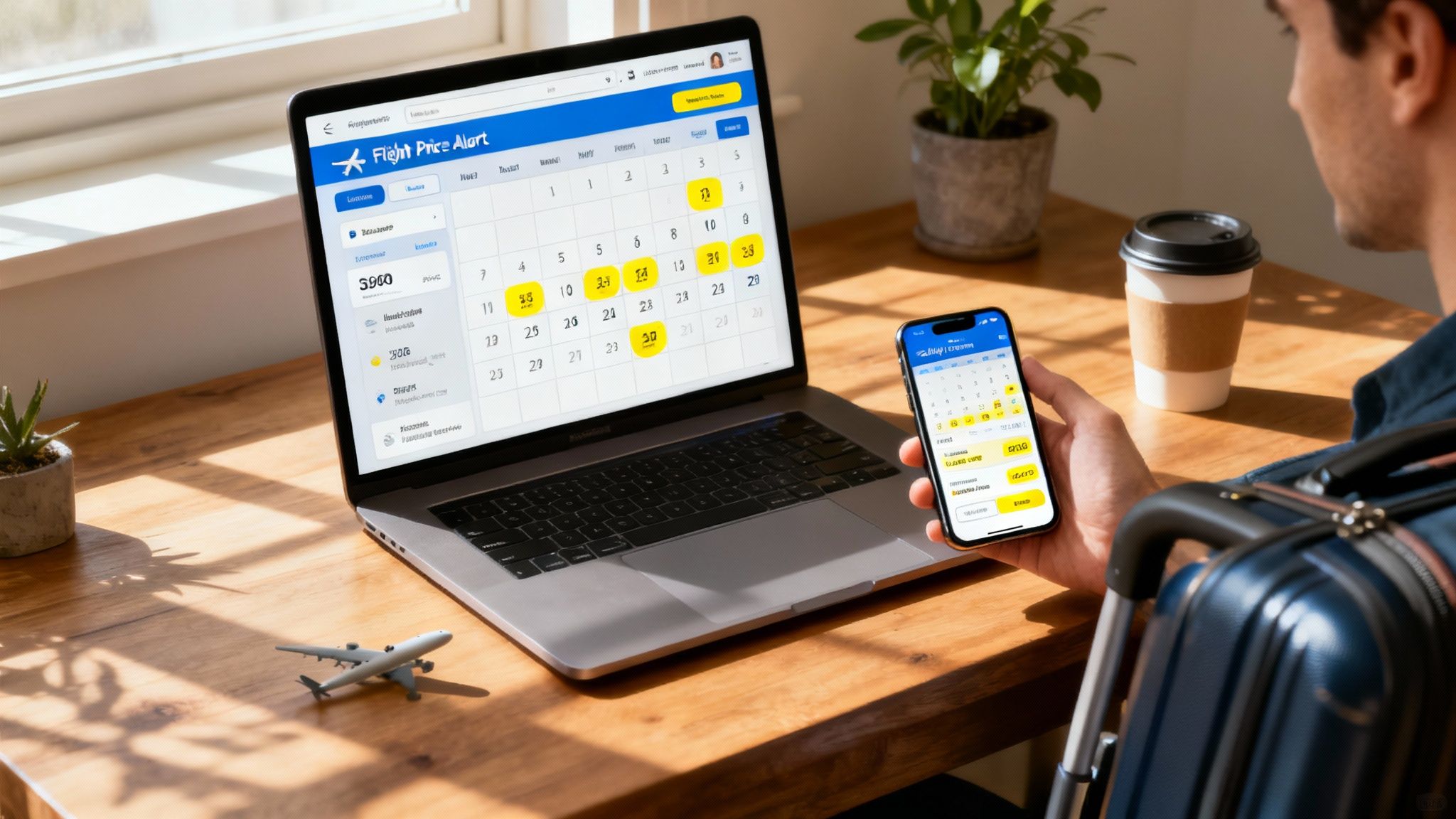
As you can see, platforms like Google Flights make this incredibly simple. With a single click, you can activate price tracking for a specific route and let the system automatically monitor fares.
Why Automated Tracking Is a Must-Have Today
This shift to automated tracking is necessary because approximately 67% of airlines use AI-based pricing that dynamically adjusts fares. These systems analyze millions of data points, allowing prices to change in seconds. A great deal can disappear in the time it takes to grab a coffee.
The single most effective strategy to stop overpaying for flights is letting technology work for you. Set up alerts on multiple platforms to cast a wider net and ensure you never miss a significant price drop.
Top Flight Price Tracking Tools at a Glance
Each tool has its strengths. Using a combination of them gives you the best coverage. Here’s a quick breakdown of the heavy hitters and how to use them.
Tool Name | Best For | Key Feature | Actionable Tip |
|---|---|---|---|
Google Flights | All-around ease of use and visual price calendars | The "Price Graph" shows historical price trends. | Use the "Any dates" tracking for your route if your schedule is flexible. |
Scott's Cheap Flights | International deal discovery and "mistake fares" | Human-curated deals sent directly to your inbox. | Set your home airport and be ready to book spontaneously when a deal hits. |
Kayak | Price predictions and comparing multiple OTAs | "Price Forecast" tool advises whether to buy or wait. | Use their forecast as a data point, but rely on your own budget and timing. |
Hopper | Mobile-first users and predictive pricing | Color-coded calendar shows the cheapest days to fly. | Turn on push notifications for your route to get clear buy/wait recommendations. |
If you know exactly where and when you want to go, start with Google Flights and Kayak. If you're flexible and just looking for an amazing deal, Scott's Cheap Flights is your best bet.
To start your journey into finding cheaper flights, it's worth learning more about how to find the best flight prices overall. The next sections provide step-by-step instructions for using these tools to save money.
Mastering the Best Flight Price Tracking Tools
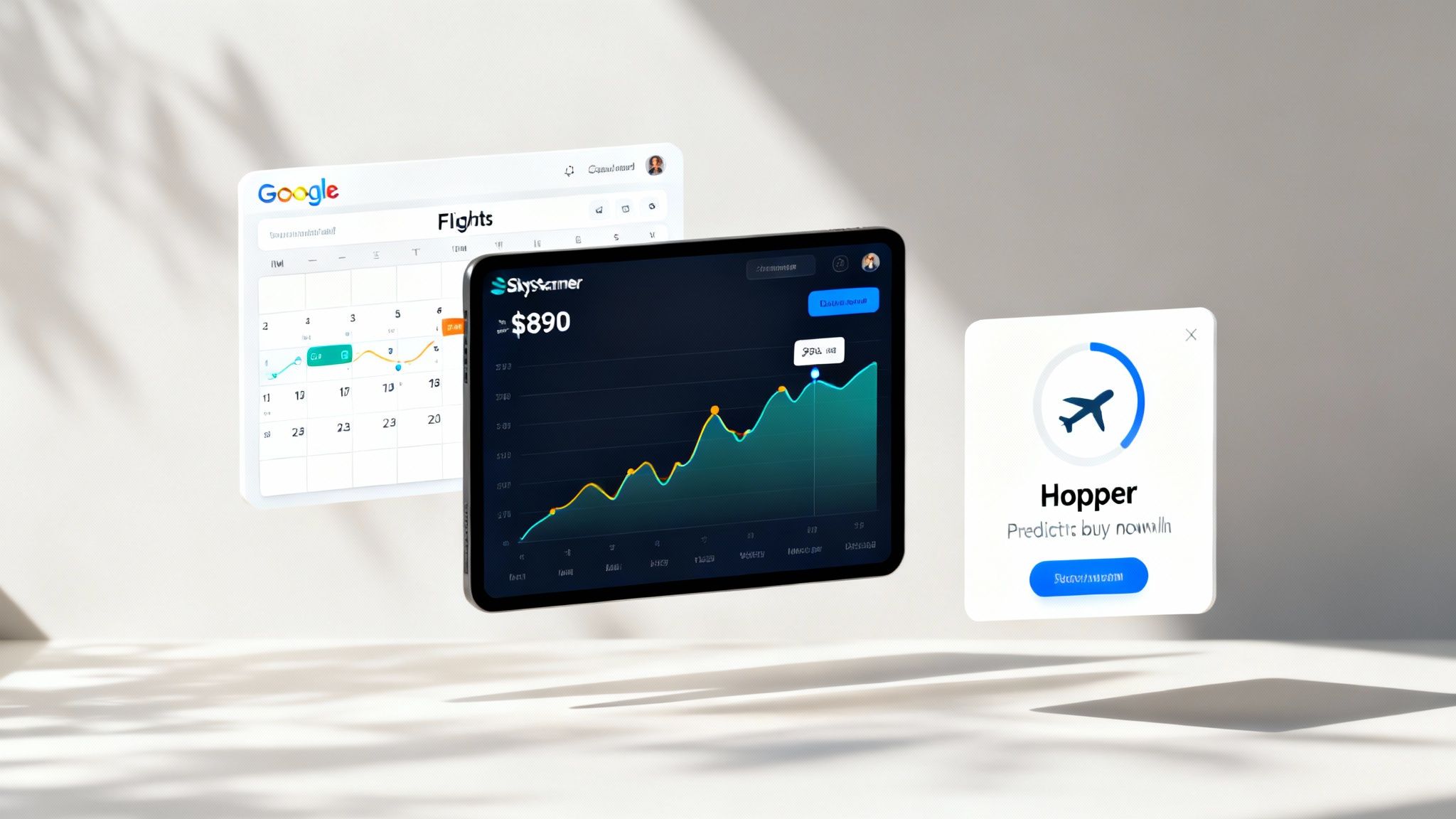
Knowing which tools to use is the first step. The next is implementing a simple, multi-layered alert system. This strategy ensures you catch deals that any single service might miss. Here’s how to build your alert network in three simple steps.
Step 1: Set Up Your Primary Alerts on Google Flights
Start with a powerhouse like Google Flights. It's the best all-around tool for its clean interface and helpful visual data.
Actionable Walkthrough:
Enter your departure and destination airports.
Select your ideal travel dates.
On the results page, find the "Track prices" toggle and switch it on.
Google will now email you whenever the fare for this specific trip changes.
The price history graph is a key feature here. Use it to see if the current price is a good deal compared to recent weeks.
Don't just track your perfect dates. I always recommend creating a second, more flexible alert. For example, track prices for a 'one-week trip in May' instead of locking yourself into specific departure and return days. You'll catch deals you would have otherwise missed.
Step 2: Leverage Predictive Analytics with Hopper
While Google Flights shows you current and past prices, Hopper predicts future ones. This mobile-only app uses AI to tell you whether to "buy now" or "wait for a better price," with a claimed accuracy of up to 95%.
Actionable Walkthrough:
Download the Hopper app and search for your flight.
Instead of booking, tap the "Watch This Trip" button.
Hopper will send you push notifications with its predictions.
Act when it tells you prices are at their lowest predicted point.
This tool is perfect if you get anxious about when to book. It provides a clear, data-driven recommendation to guide your decision.
Step 3: Expand Your Reach with Aggregators
Finally, set alerts on a meta-search engine like Skyscanner, Kayak, or Momondo. These platforms scan hundreds of online travel agencies (OTAs) and airline sites, sometimes uncovering deals or pricing errors that other trackers overlook.
Your complete monitoring system:
Google Flights: Your home base for user-friendly tracking and historical data.
Hopper: Your pocket advisor for its predictive 'buy or wait' recommendations.
Skyscanner/Kayak: Your wide net for catching deals across every possible seller.
By setting up alerts across these platforms, you’ve built a robust system that ensures you’ll be the first to know about almost any significant price drop.
Advanced Strategies to Outsmart Airline Pricing
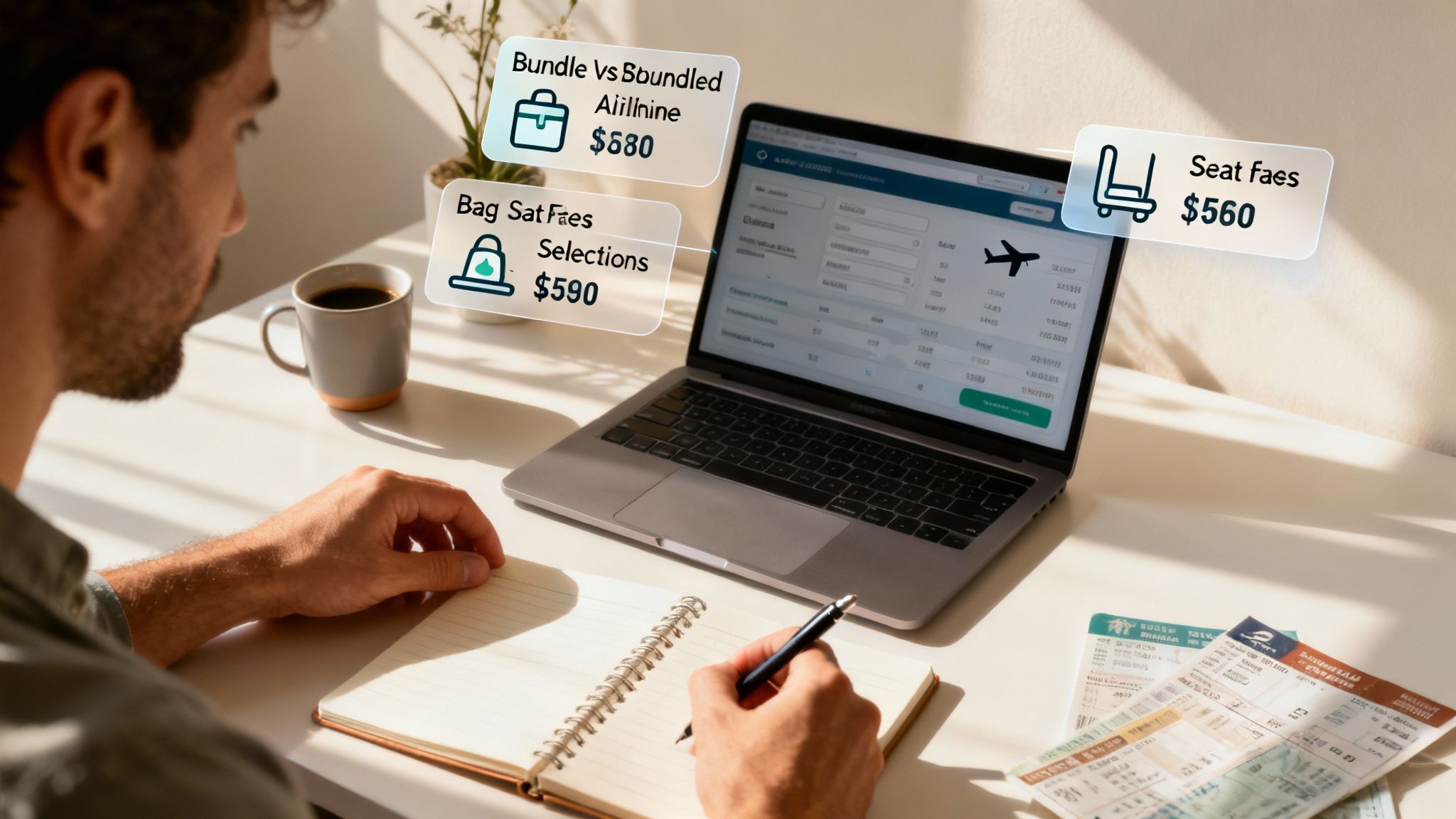
With your alerts active, it's time to think like a travel hacker. This means moving beyond reacting to notifications and starting to anticipate price drops. To do this, you need to understand the why behind price changes.
A key factor is "fare unbundling." Budget airlines show a low base fare, then add fees for carry-on bags, seat selection, and more. When tracking, always look at the total price, not just the initial search result.
While data showed U.S. airfares creeping up by 3.3% year-over-year in August 2024, the bigger picture reveals a 9.6% drop in base prices over the last decade. Airlines now make a huge chunk of their money from these extra fees, a detail a basic price alert might miss.
Actionable Tactic: Anticipate Price Drops from Airline Competition
Here’s a pro-level move: monitor airline competition on your desired route. When a new airline, especially a low-cost carrier, starts flying a route, established airlines often cut prices to compete.
How to capitalize on this:
Stay informed about new airline routes from your home airport (e.g., follow travel news sites or your airport's social media).
When a new route is announced, immediately set up price alerts on Google Flights for the incumbent airlines flying that same route.
Watch for "fare wars" or sales to launch in the weeks leading up to the new service starting.
This proactive step turns market shifts into personal savings.
The best flight deals often come from understanding the story behind the price. Is it a new route, increased competition, or just a slow season? Answering these questions gives you a massive edge over the average traveler.
This mindset helps you avoid outdated travel myths, like the idea there's one magic day to book. In today's dynamic market, that's rarely true. If you're curious, we took a closer look at this in our article debunking whether Tuesday is really the cheapest day to travel.
Understanding Price Trends and Timing Your Purchase
Knowing how to track flight prices is only half the battle. The final step is knowing when to pull the trigger. Airfare moves in patterns based on demand, season, and events. Learning to spot these patterns helps you anticipate the best time to buy.
For example, recent data projected that while average global ticket prices might fall 2.2% in 2025, North American fares could drop 2.9% while European fares could rise 0.6%. Understanding these regional trends helps you set realistic expectations for your alerts.
How to Use the Booking Window to Your Advantage
The "booking window" is the sweet spot between booking too early (when prices are high) and too late (when last-minute demand spikes fares). Here are the general rules of thumb:
Domestic Travel: Start tracking 3-4 months out. Aim to book 1–3 months before your trip.
International Travel: Start tracking 6-8 months out. Aim to book 2–8 months in advance.
Use this infographic to guide your timing.
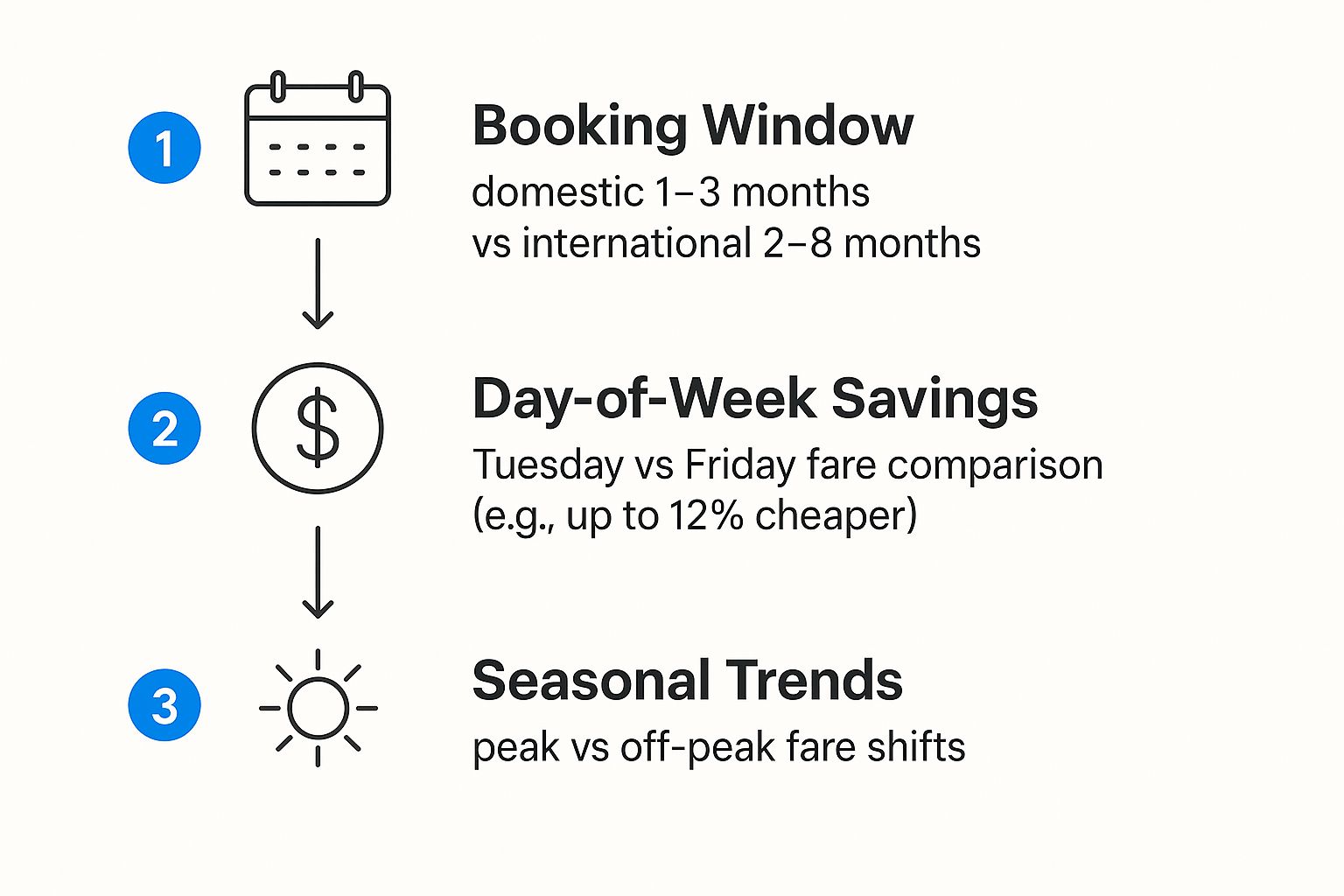
Combining the right booking window with flexibility on your travel days and an awareness of seasonality creates a powerful framework for a smart purchase.
Actionable Tactic: Leverage Seasonality and Day of the Week
Beyond the booking window, daily and seasonal trends can unlock more savings. It’s a reliable strategy that flying on a Tuesday or Wednesday is almost always cheaper than a Friday or Sunday. This is because business travel dips mid-week and leisure travelers target weekends.
The core principle is simple: fly when others aren't. Choosing off-peak travel times—whether it's a Tuesday morning flight or visiting a destination in its shoulder season—is one of the most reliable ways to secure a lower fare.
While we're focused on flights here, the idea of dynamic pricing isn't unique to airlines. Getting a feel for understanding how ticket prices fluctuate across travel modes can make you a smarter traveler all around. This broader knowledge helps you better recognize the universal patterns of supply and demand that dictate when flight prices drop for the best deals.
Putting It All Together: Your Flight Tracking Checklist
We've covered the tools and strategies. Now, here's a repeatable checklist to turn your flight search from a passive hope into a strategic hunt.
Your Action Plan for Booking
Follow these steps before you book any flight.
Step 1: Define Your Flexibility. Before searching, determine your non-negotiables. Are your dates firm? Can you fly into a nearby airport? Knowing your flexibility is the most crucial step. For example, check flights into Fort Lauderdale (FLL) or West Palm Beach (PBI) if Miami (MIA) is too expensive.
Step 2: Set Alerts on Multiple Platforms. Create alerts on both Google Flights (for its visual data) and Hopper (for predictive advice). This creates a safety net so you don’t miss a platform-exclusive deal.
Step 3: Use the ‘Explore’ Feature. If your destination is flexible, use the "Explore" or "Anywhere" search on Skyscanner or Google Flights. Enter your home airport and select "Anywhere" as the destination to find the cheapest places to fly.
Step 4: Calculate the *Full* Cost. Before booking a deal, calculate the total price including bags and seat selection. A low base fare from a budget carrier can quickly become expensive. Learn how to avoid airline junk fees to protect your budget.
By creating a system, you take the guesswork and anxiety out of booking. This checklist isn’t just about saving money; it’s about saving time and making the whole process way less stressful.
Even with the best tools, a few questions always pop up. Getting these details right can be the difference between a good deal and a great one.
Let's tackle some of the most common questions.
How Far in Advance Should I Start Tracking Flights?
The answer depends on your destination.
For a domestic trip, start tracking 2-3 months out. The best time to buy is often 1-2 months before your flight.
For international travel, you need a longer runway. Set up your alerts 4-6 months in advance to learn the pricing patterns and spot a genuine sale.
No matter the destination, my best advice is simple: set up your alerts the moment you have a rough idea of your plans. You never know when a surprise flash sale will hit, and you want to be ready for it.
Is It Really Cheaper to Book Flights on a Tuesday?
This is an outdated myth. In the past, airlines might have loaded new fares on Tuesdays, but today's dynamic pricing algorithms adjust fares 24/7.
Relying on a specific day to book is far less effective than using automated alerts. While the cheapest day to fly is often a Tuesday or Wednesday, the cheapest day to book could be any day of the week. Focus on continuous monitoring, not a magic booking day.
Does Incognito Mode Actually Find Cheaper Flights?
No. This is another persistent myth. There is no concrete evidence that browsing in incognito or private mode results in cheaper fares. Airlines and booking sites base prices on broad factors like route demand, seasonality, and competitor pricing—not your personal browser history.
Instead of clearing your cookies, focus your energy on strategies that work:
Set up price alerts: This is the most powerful tool you have.
Be flexible with your dates: Shifting your trip by a day or two can unlock huge savings.
Check nearby airports: A short extra drive can often cut your airfare significantly.
Ready to stop searching and start saving? Oafare, Inc. combines powerful search technology with real-time data to help you find the best deals on flights, hotels, and more. Set up your free fare alerts today at https://www.oafare.com.
Article created using [Outrank](https://outrank.so)

Comments